Shonishin tools: zanshin, Yoneyama and enshin
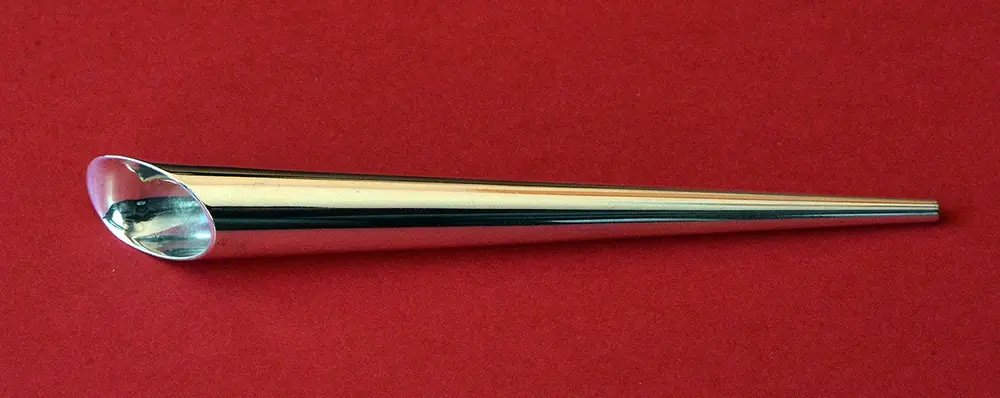
Shonishin (小児鍼) is Japanese paediatric acupuncture: a very light, non-insertive contact technique in which the skin is rubbed, pressed or gently tapped with specific instruments. It was developed and popularised in Osaka between the Edo and Meiji periods, and the earliest documented references date from the 18th century.
Treating children is taught in dedicated training courses. Stephen Birch, Academic Dean of the EBTA, has written a handbook on the subject: Shonishin: Japanese Pediatric Acupuncture (Thieme, 2nd ed., 2016).
Zanshin
The name comes from 鑱鍼, the first of the nine classical needles of the Lingshu, which was used for very shallow incisions. In shonishin, by contrast, it refers to instruments that do not pierce the skin. The two common types are the plectrum (bachi) and the trumpet (rappa).
My zanshin is the trumpet type: a 110 mm cone with a 13 mm upper opening and a 3 mm lower opening, in silver or copper. I also make a regular zanshin for shonishin, in silver.
Yoneyama
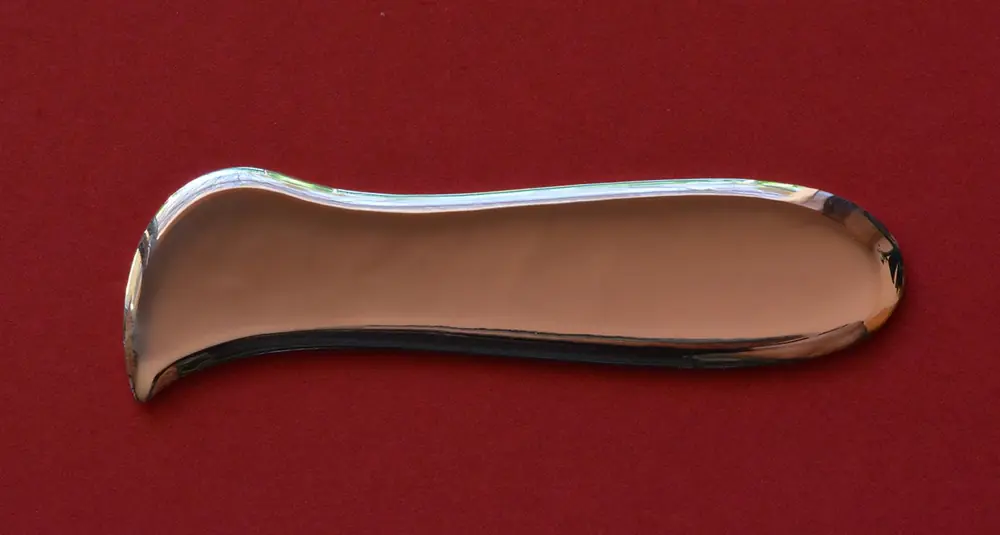
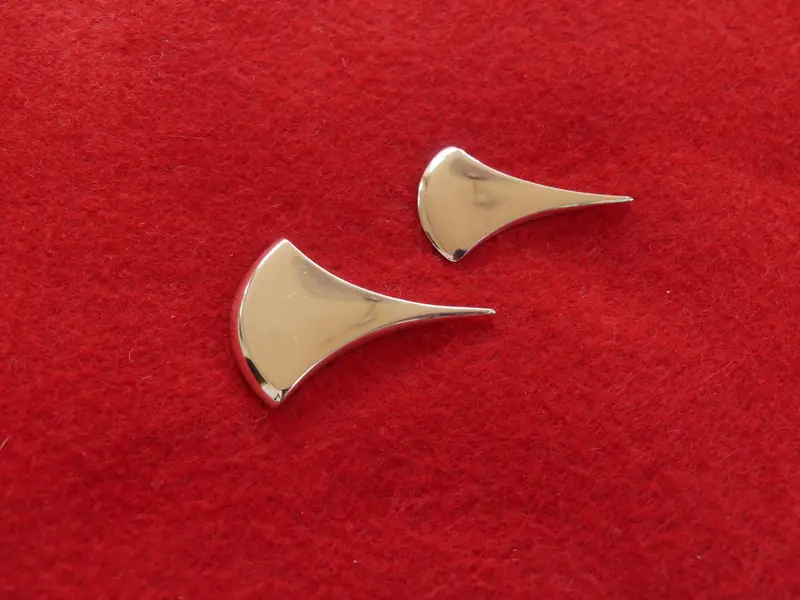
The Yoneyama (米山式小児鍼, “Yoneyama style”) is a small flat tool, triangular or shaped like a ginkgo leaf, traditionally made of copper and also of silver. It does not pierce the skin: it is used to rub along the meridians and to tap gently. I make it in silver, in two sizes: 35 × 20 × 3 mm and 40 × 30 × 4 mm.
Enshin
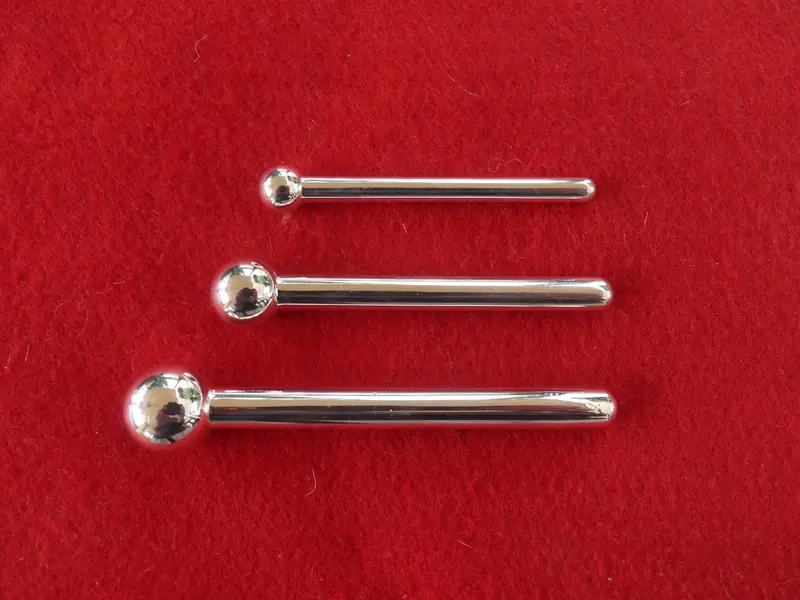
The enshin is another of the nine classical needles: a rod with a spherical end that is slid, rubbed or pressed on the skin, without insertion. It is also used in shonishin. I make four sizes in silver, with balls from 9.5 to 16 mm, and a model held between the fingers.
Sizes and prices
| Model | Size | Metals | Price |
|---|---|---|---|
| Regular zanshin (shonishin) | 925 silver | from €115 | |
| Shonishin Yoneyama | 35 × 20 × 3 mm | 925 silver | from €85 |
| 40 × 30 × 4 mm | 925 silver | from €105 |
Sizes for the trumpet zanshin and the enshin are in the catalogue. There is a separate guide on the teishin.
See catalogue and prices Place an order